
FAQ: Baby Wraps & Ergonomic Carriers for Travel
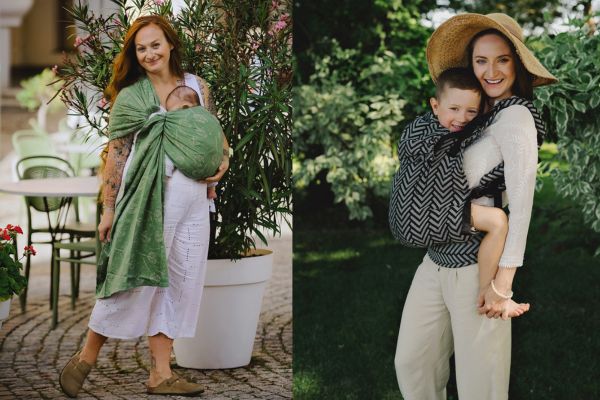
FAQ: Baby Wraps & Ergonomic Carriers for Travel
1. Can I wear my baby in a wrap or carrier at the airport and during security checks?
Yes! A baby carrier or wrap is a lifesaver at the airport, especially when you need to check your stroller at the gate. During TSA security checks (metal detectors), you will usually be asked to take the baby out for safety reasons. However, once through, having your hands free makes it much easier to navigate toward the gate, handle passports, and manage carry-on bags.
2. Can I use an ergonomic carrier or wrap on a plane during takeoff and landing?
According to most FAA and airline regulations, during takeoff and landing, the baby must be secured with an "infant belt" or sit in an approved car seat. Once the "fasten seatbelt" sign is off, a woven wrap or carrier is the best way to help your baby sleep in a new, noisy environment or walk around the cabin if they need soothing and closeness.
3. Which carrier is best for holiday hiking?
If you plan on hiking mountain trails or visiting cities with many stairs, choose a Soft Structured Carrier (SSC) instead of a heavy and rigid hiking frame carrier.
Why? Ergonomic carriers are lighter, pack flat in your suitcase, and allow the baby to stay in the physiological M-position, which is hip-healthy and more comfortable for long periods.
For hot weather: We recommend carriers with Linen or Tencel™ blends, which provide excellent moisture-wicking.
4. Ring sling or carrier – what to bring for short trips and the beach?
For quick transitions, going from the hotel to the pool, or a short walk to the beach, a ring sling is unbeatable. It’s lightning-fast to put on and takes up as much space as a small towel. It allows for a hip carry, giving the baby a great view while reducing body-to-body heat, which is crucial in full sun.
5. Carrier or wrap – what to choose for longer excursions and intensive sightseeing?
If you plan to be on your feet for several hours, visiting museums or hiking gentle trails, opt for a Soft Structured Carrier (e.g., Prime or Preschooler model) or a long woven wrap.
Why a carrier? It’s the most comfortable option for long distances. The baby’s weight is perfectly distributed across both shoulders and your hips, relieving pressure on the spine. Buckles allow you to quickly take the baby out and put the carrier back on without the fabric touching the ground.
Why a woven wrap? It offers the most precise, custom adjustment. It is indispensable for long-term supportive carrying, providing maximum support for the spine and hips every minute of your walk.
6. How to dress a baby in a wrap or carrier for tropical travel?
Remember that a wrap or carrier counts as an extra layer of clothing. In hot climates, stick to the "minimum": just a diaper and perhaps a breathable bamboo or thin cotton bodysuit. Protect exposed limbs with high UV filter sunscreen and use a wide-brimmed hat to cover the baby's neck.
7. Wrap or stroller – which is better for vacation?
The ideal is to bring both, but if you must choose one, a carrier wins on mobility. With a carrier, you can easily navigate sandy beaches, cobblestone streets, narrow museum aisles, or subway stairs where a stroller becomes a burden. A Little Frog carrier folds down small, so you can always have it in your backpack as an "emergency" tool.
8. Is it safe to carry a baby in a carrier during sightseeing in the heat?
Yes, as long as you follow basic rules:
Thermoregulation: Choose materials with Tencel™, Linen, or Bamboo blends that actively wick away moisture.
Breaks: Regularly take the baby out of the carrier to "air out" their back and offer plenty of fluids.
Avoid peak heat: Plan your sightseeing for morning or late afternoon, avoiding the peak UV activity between 11:00 AM and 3:00 PM.
9. How to pack a wrap or carrier to save space in luggage?
Woven wraps: Best rolled tightly or placed flat at the bottom of the suitcase – they act as a cushion for delicate items.
Buckle carriers: Fasten the waist belt, fold the panel inward, and wrap the shoulder straps around it to create a compact bundle.
Ring sling: Takes up the least space and can fit into a fanny pack or purse. It’s the best hands-free travel option!
10. What to do if the baby falls asleep in the carrier while sightseeing?
This is natural – the rhythmic walking is soothing. Little Frog carriers come with a hood that is worth using: when the baby falls asleep, attach the hood on one side (leaving the other side open for airflow). This stabilizes the head and protects the child from sun and overstimulation.
11. How to handle diaper changes while on the go?
Using a structured carrier (like the Prime) makes it very easy. You can unbuckle the shoulder straps without fully removing the waist belt – the carrier then hangs like an "apron," giving you quick access to the baby. Putting them back in takes only a few seconds.
12. How to maintain hygiene for the carrier/wrap while traveling?
It’s worth bringing strap protectors (drool pads). Children often chew on the shoulder straps, and these pads can be easily removed and washed in a sink – they dry much faster than the whole carrier. For wraps, a damp cloth is usually enough for spot cleaning.
13. Will carrying my baby during travel put too much strain on my back?
The key is proper adjustment. In an ergonomic carrier, the baby's weight should rest mainly on your hips, not your shoulders. If you feel tired, change the carrying position – moving the baby to a back carry (for babies with good head control) instantly shifts the center of gravity and provides relief.
14. What if the baby gets sweaty in the carrier while sightseeing?
This is natural with skin-to-skin contact. Bring 2-3 thin bamboo or muslin cloths. You can place one between yourself and the baby – it acts as an absorbent "isolator." When it feels damp, simply swap it out to keep you both dry and comfortable.
15. Can I breastfeed in a wrap or carrier in public places?
Yes, and it’s one of the greatest advantages of hands-free parenting!
Simply loosen the straps or the fabric slightly to gently lower the baby to chest height. The carrier panel or the tail of the wrap will provide nursing privacy.
Important: Remember to re-tighten the carrier after feeding so the baby returns to a safe, supportive position.
16. How to protect the baby from insects during forest hikes?
During walks in the woods, the carrier acts as an extra mechanical barrier. You can spray a baby-safe repellent onto the fabric of the carrier instead of applying it directly to the baby's skin. Protect the baby's legs with high socks and use the hood for extra coverage.
Find your perfect travel companion:
Recommended

Baby Carrier Preschooler - Sky Miles

Baby Carrier Preschooler - Adventure Miles

Baby Carrier Preschooler - Platinum Miles

Baby Sling TENCEL™ Iris Cube size 6

Baby Sling TENCEL™ Rocky Cube size 6

Bamboo Quartz M – a beige ring sling for carrying newborns and infants

Bamboo Zircon M – a colourful, breathable ring sling ideal for summer

Bamboo Misty Zircon M – colour and softness for everyday babywearing

Baby Sling TENCEL™ Atmosphere Cube size 6

Ring Sling TENCEL™ Atmosphere Cube size M (2 m)

Ring sling TENCEL™ Joy of life - size M (2 m)

Baby Sling TENCEL™ Joy of life size 6

Baby Carrier Prime Platinum Miles v3

Baby Carrier Prime Natural Miles v3

Ring sling Linen Joy of life - size M (2 m)

Baby Carrier Preschooler - Slate Moonstone

Baby Carrier Preschooler - Beige Moonstone

Baby Carrier Prime Re Rocky Miles v3

Baby Carrier Prime Calm Miles v3

Baby Sling TENCEL™ Calm Cube size 6

Ring sling TENCEL™ Calm Cube - size M (2 m)

Baby Sling TENCEL™ Hazy Love Drift size 6

Ring sling Linen Whisper - size M (2 m)

Baby Carrier Prime TENCEL™ Joy of life v3

Ring sling TENCEL™ Silver Path - size M (2 m)

Baby Sling TENCEL™ Silver Path size 6

Baby Carrier Prime TENCEL™ Aurora Cube v3
