
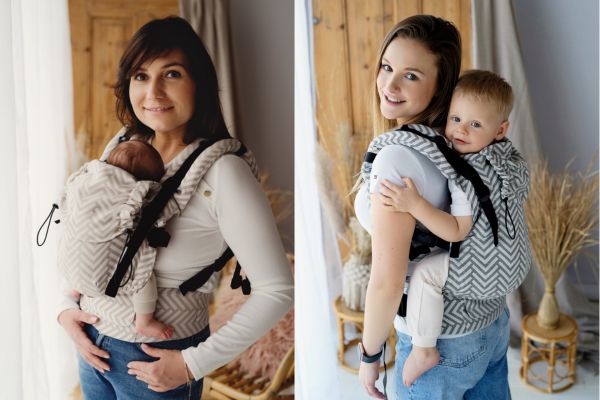
Babywearing 101: Facing In vs. Facing Out – Finding the Best View for Your Baby
As your little one starts hitting those major milestones, their curiosity seems to kick into high gear. Suddenly, they’re watching everything—from the dog chasing a ball to the rustle of leaves in the park. It’s natural to feel like your baby is "ready" to face the world in their carrier, but is that outward-facing position truly the best seat in the house?
Navigating the world of babywearing can feel like a maze of trends and technical terms. Let’s break down the "Facing In vs. Facing Out" debate to help you make the best choice for your baby’s comfort and long-term development.
The "Big Picture" vs. The Safe Base
When we carry our babies facing out, we’re trying to satisfy their need for visual stimulation. But here’s the catch: a baby’s nervous system is still developing, and the world is loud.
When your baby faces you, you are their "Safe Base." They can observe the world around them while having the freedom to turn their head away, hide their face in your chest, or seek eye contact if a situation becomes too intense. When they face outward, that "off switch" is gone. They are constantly "on," absorbing every sound, shadow, and movement, which often leads to the dreaded overstimulation meltdown.
Anatomy Matters: The "M-Position"
From a pediatric perspective, the goal of a carrier is to support your baby’s natural anatomy. When facing inward, the fabric of an ergonomic carrier creates the "M-position," supporting the baby from knee to knee and tilting the pelvis so the spine naturally curves into a healthy "C."
In an outward-facing position, gravity takes over. The baby’s legs dangle, the pelvis tilts the wrong way, and the spine is forced into an unnatural, straight line. That "dangling" weight puts significant pressure on the baby’s sensitive hip joints and groin, which is exactly what we want to avoid during those crucial growth months.
Better Connections, Better Views
Many parents worry that facing in limits their baby’s view. But think of it this way: when your baby faces you, they are at the perfect height to see your reactions to the world. They learn how to interpret new experiences by looking at you first.
- Inward-Facing: You’re in sync. You catch the early signs of hunger, fatigue, or excitement immediately.
- Outward-Facing: You are disconnected from their subtle cues until they are already distressed.
The Verdict?
While the trend of "world-view" carriers is popular, the physiological and emotional benefits of facing inward are unmatched. Your baby isn't missing out on the world—they’re experiencing it with the person who matters most.
As they grow, you don't need to switch to an outward-facing position to give them a better view! Consider moving to high-back carries once your baby has the neck strength for it. It keeps them ergonomic, safe, and gives them a fantastic "front-row seat" to the world over your shoulder.
The bottom line: Keep them close, keep them safe, and keep that heart-to-heart connection strong. Explore our collection of ergonomic Little Frog carriers and find the perfect fit for your growing baby.


